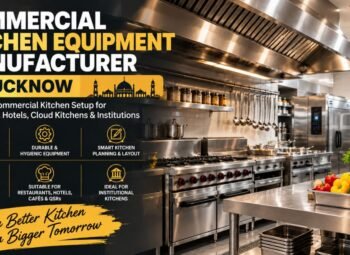

Setting up a restaurant requires careful planning, especially when it comes to the kitchen. The kitchen is where most of the operational work happens, from food preparation and cooking to storage, cleaning, and order dispatch. The right equipment can improve workflow, maintain hygiene, reduce unnecessary movement, and help your staff work efficiently during busy hours.
If you are searching for a Restaurant Kitchen Equipment Manufacturer in Lucknow, Suvidha Industries provides commercial kitchen and hospitality infrastructure solutions designed around the practical requirements of restaurants, cafés, cloud kitchens, QSRs, catering businesses, and other food-service operations.
Based in Lucknow, Suvidha Industries works across hospitality infrastructure and provides modular stainless-steel kitchen solutions, QSR setups, food carts, and related project support. The company also offers planning, installation, training, compliance guidance, and other support as part of its wider turnkey approach.
Why Restaurant Kitchen Equipment Is Important
A restaurant kitchen is very different from a residential kitchen. Commercial kitchens operate for long hours and may need to handle hundreds of orders during a busy day.
Using suitable restaurant kitchen equipment can help with:
- Faster food preparation
- Better kitchen organization
- Consistent cooking
- Efficient use of available space
- Easier cleaning
- Better staff movement
- Improved productivity
- Safer and more hygienic operations
However, buying equipment simply because it is available is not the best approach. Every restaurant has different requirements based on its cuisine, menu, kitchen size, expected order volume, and budget.
For example, a restaurant serving North Indian cuisine may need commercial bhattis, tandoors, cooking ranges, preparation tables, refrigeration, and storage. A pizza restaurant may need pizza ovens, dough preparation equipment, refrigeration, and dedicated preparation counters.
This is why working with an experienced restaurant kitchen equipment manufacturer in Lucknow can be useful when planning a complete kitchen.
Restaurant Kitchen Equipment Manufacturer in Lucknow – What Suvidha Industries Offers
Suvidha Industries approaches hospitality projects as complete setups rather than focusing only on individual pieces of equipment. Its hospitality infrastructure offering includes modular stainless-steel kitchens, QSR kiosks, food carts, and solutions designed around operational efficiency, hygiene, and compliance.
Depending on the restaurant’s requirements, a commercial kitchen may include the following categories.
1. Commercial Cooking Equipment
Cooking equipment is the core of almost every restaurant kitchen.
Depending on the cuisine and menu, restaurants may require:
- Commercial gas ranges
- Indian bhattis
- Chinese bhattis
- Tandoors
- Grills
- Fryers
- Pizza ovens
- Cooking ranges
- Bulk cooking equipment
- Specialty cooking units
The right equipment should be selected according to the type of food being prepared and the expected production volume.
For example, a Chinese food outlet may require high-flame wok cooking equipment. Suvidha Industries offers Chinese bhatti solutions designed for commercial Indo-Chinese cooking applications.
2. Stainless Steel Kitchen Equipment
Stainless steel is commonly used in commercial kitchen fabrication because it provides durable and practical surfaces for food preparation, storage, and cleaning.
A restaurant kitchen may require:
- Stainless-steel work tables
- Preparation counters
- Storage cabinets
- Wall shelves
- Storage racks
- Sink units
- Dishwashing stations
- Utility tables
- Customized fabrication
Suvidha Industries specifically describes its hospitality solutions as modular stainless-steel kitchens designed for operational efficiency, hygiene, and compliance.
A properly planned stainless-steel layout can also help restaurants maintain better organization by giving each activity its designated working area.
3. Commercial Refrigeration
Proper refrigeration is essential for restaurants that handle fresh vegetables, dairy products, meat, sauces, beverages, prepared ingredients, and other perishable food products.
Depending on the restaurant, refrigeration requirements may include:
- Commercial refrigerators
- Deep freezers
- Undercounter refrigeration
- Refrigerated preparation counters
- Chillers
- Cold-storage solutions
The required capacity should be based on the restaurant’s menu, storage requirements, and daily consumption.
Choosing a refrigerator that is too small can create storage problems, while unnecessarily oversized equipment can increase the initial investment and operating requirements.
4. Food Preparation Equipment
Food preparation can account for a significant amount of kitchen labor, particularly in restaurants with large or diverse menus.
Preparation equipment may include:
- Dough kneaders
- Mixers
- Grinders
- Vegetable cutting machines
- Food processors
- Slicers
- Preparation tables
- Ingredient storage systems
The objective is to create an efficient process where ingredients can move logically from storage to preparation and then to cooking.
5. Pizza Ovens
Restaurants, cafés, bakeries, and QSRs serving pizza require dedicated pizza ovens for consistent cooking.
When selecting a commercial pizza oven, consider:
- Pizza size
- Daily production
- Available kitchen space
- Heating method
- Temperature requirements
- Energy source
- Ease of cleaning
- Maintenance requirements
The correct pizza oven should be selected based on the restaurant’s actual production requirements rather than simply choosing the largest available model.
6. Tandoors and Bhattis
Indian restaurants, kebab outlets, dhabas, caterers, and food businesses often require specialized cooking equipment such as tandoors and bhattis.
These units can be designed around specific cooking requirements and available kitchen space.
Suvidha Industries offers different hospitality and cooking solutions, including Indian and Chinese cooking equipment for commercial applications. Its website also highlights food carts, QSRs, and traditional kitchen bhattis within its hospitality infrastructure offering.
Customized Restaurant Kitchen Equipment in Lucknow
One of the biggest mistakes restaurant owners can make is trying to fit a standard kitchen into a space that has completely different dimensions and workflow requirements.
Every restaurant is different.
The kitchen may have:
- Different floor dimensions
- Different entry and exit points
- Different utility connections
- Different ventilation requirements
- Different cooking requirements
- Different storage requirements
- Different staff capacity
A customized kitchen layout can take these factors into account before equipment is manufactured and installed.
This can help avoid situations where equipment blocks staff movement or where frequently used equipment is positioned too far away from preparation areas.
How to Plan a Restaurant Kitchen
Before purchasing equipment, restaurant owners should consider the complete workflow.
Step 1: Finalize the Menu
The menu should be finalized before preparing the equipment list.
A bakery, pizza restaurant, biryani outlet, café, QSR, and fine-dining restaurant will all have different equipment requirements.
Step 2: Estimate Daily Production
Estimate the expected number of customers and orders.
Consider both normal and peak periods.
For example, a restaurant that expects heavy dinner traffic may need equipment with sufficient capacity to handle a high volume of orders within a short period.
Step 3: Measure the Kitchen
Measure:
- Length
- Width
- Ceiling height
- Doors
- Windows
- Utility points
- Drainage
- Gas connections
- Electrical points
These measurements help determine what equipment can realistically fit into the kitchen.
Step 4: Plan the Workflow
A practical restaurant kitchen generally needs logical areas for:
Storage → Preparation → Cooking → Plating → Dispatch → Washing
The exact arrangement depends on the restaurant, but the basic principle is to reduce unnecessary movement.
Step 5: Select Equipment
Once the workflow is understood, select equipment based on capacity, quality, durability, maintenance, and budget.
Step 6: Plan Installation
Installation should account for utilities, ventilation, drainage, electrical connections, gas connections, and safe access.
Benefits of Buying From a Restaurant Kitchen Equipment Manufacturer
Restaurant owners often have the choice between buying equipment from multiple distributors or working directly with a manufacturer.
A manufacturer-led approach can be useful when the project requires customized fabrication or multiple pieces of equipment.
Potential advantages include:
Customized Design
Equipment and stainless-steel fabrication can be planned according to the available kitchen space.
Better Coordination
When several kitchen components are part of the same project, coordinating fabrication, delivery, and installation through one provider can simplify the process.
Commercial-Grade Construction
Professional kitchens require equipment designed for regular commercial use rather than occasional household use.
Project-Level Support
A complete kitchen project may require more than equipment. Layout planning, installation, training, and operational guidance can also be important.
Suvidha Industries states that its project approach includes planning, infrastructure setup, training, compliance support, and market-related assistance rather than operating only as an equipment vendor.
Why Choose Suvidha Industries as a Restaurant Kitchen Equipment Manufacturer in Lucknow?
Suvidha Industries is based in Lucknow and works across food processing, beverages, hospitality infrastructure, agro-based projects, and MSME-scale industries. The company’s hospitality offering includes commercial stainless-steel kitchens, QSR and café kiosks, food carts, bhattis, and related operational support.
For restaurant owners, this means the kitchen can be considered as part of the wider business setup instead of being treated as a collection of unrelated appliances.
Local Expertise
Being based in Lucknow makes it easier for local businesses to discuss their requirements, kitchen dimensions, customization needs, and project planning.
Stainless Steel Kitchen Solutions
Suvidha Industries provides modular stainless-steel kitchen solutions designed around hygiene, operational efficiency, and durability.
Customized Solutions
Different restaurants have different menus and spaces. Equipment and kitchen layouts can therefore be planned around individual requirements.
Turnkey Approach
Suvidha Industries describes its wider business model as a turnkey ecosystem that can cover consultation, financing support, infrastructure setup, training, compliance, and market support.
Restaurant Kitchen Equipment for Different Types of Businesses
Restaurant Kitchens
Traditional restaurants may require a combination of cooking ranges, bhattis, tandoors, preparation counters, refrigeration, storage, washing areas, and exhaust systems.
Cloud Kitchens
Cloud kitchens generally prioritize compact layouts, fast preparation, packing, and dispatch.
Suvidha’s current website lists cloud kitchen setups with stainless-steel preparation tables, cooking equipment, exhaust systems, SOPs, and branding support.
Cafés
Cafés may require compact cooking equipment, beverage equipment, refrigeration, preparation counters, storage, and service counters.
Bakeries
Bakeries typically need specialized ovens, mixers, dough preparation equipment, refrigeration, work tables, and storage.
QSRs
Quick-service restaurants need efficient layouts that allow staff to prepare and serve food quickly.
Suvidha Industries provides QSR kiosks and food carts as part of its hospitality infrastructure solutions.
Catering Businesses
Catering operations often require equipment capable of handling larger preparation volumes, depending on the size and type of events served.
What to Look for When Buying Restaurant Kitchen Equipment
Price should not be the only factor when selecting commercial kitchen equipment.
Consider the following:
Build Quality
Look at the construction, materials, finish, and suitability for commercial use.
Kitchen Capacity
Equipment should match your expected production volume.
Ease of Cleaning
Kitchen equipment should be practical to clean and maintain.
Space Requirements
Always check equipment dimensions before ordering.
Energy Requirements
Consider electricity, gas, ventilation, and other utility requirements.
Maintenance
Ask about servicing, spare parts, warranty, and after-sales support.
Customization
If your kitchen has unusual dimensions or workflow requirements, customized equipment may be more appropriate than standard equipment.
How Much Does Restaurant Kitchen Equipment Cost in Lucknow?
There is no single price for a complete restaurant kitchen because the total investment depends on several factors.
These include:
- Restaurant size
- Menu
- Equipment quantity
- Equipment capacity
- Stainless-steel fabrication
- Refrigeration requirements
- Cooking equipment
- Ventilation
- Customization
- Installation
- Utility requirements
A small café will naturally have different requirements from a large restaurant or institutional kitchen.
The most practical approach is to first create an equipment list and kitchen layout and then request a project-specific quotation.
Restaurant Kitchen Equipment Manufacturer vs. Local Reseller
When comparing a manufacturer with a reseller, restaurant owners should look beyond the purchase price.
Ask:
- Can the equipment be customized?
- Who will handle installation?
- Is after-sales service available?
- Are spare parts accessible?
- Can multiple equipment requirements be coordinated?
- Can the supplier help with kitchen layout?
- Is the equipment suitable for continuous commercial use?
For a complete restaurant setup, these factors can be as important as the initial purchase price.
Maintenance Tips for Restaurant Kitchen Equipment
Proper maintenance can help commercial kitchen equipment remain reliable.
Restaurant operators should:
- Clean equipment regularly.
- Remove food residue after use.
- Keep stainless-steel surfaces clean and dry.
- Inspect gas connections where applicable.
- Check electrical components regularly.
- Keep ventilation systems maintained.
- Follow manufacturer maintenance instructions.
- Schedule professional servicing when required.
Regular maintenance can also help identify small problems before they become major operational issues.